


Every September 11, I return to the memories that shaped me. In 2001, I was serving as special assistant to the Governor of New Jersey. My role was to travel with him daily, morning and night. On that morning, I arrived at Drumthwacket for a 9 a.m. event, only to be met by a State Trooper from the executive protection unit racing out the door—his father was in the Towers.
The hours that followed are etched in my memory: being rushed into the basement of State Police headquarters, briefed minute to minute, conducting press conferences with as little as we knew. Later, a Blackhawk helicopter came to carry the Governor toward Ground Zero. He turned to me and said, “Not today, Lisa. I don’t know what we will see. Today, I’d like you to stay here—and to stay safe.”
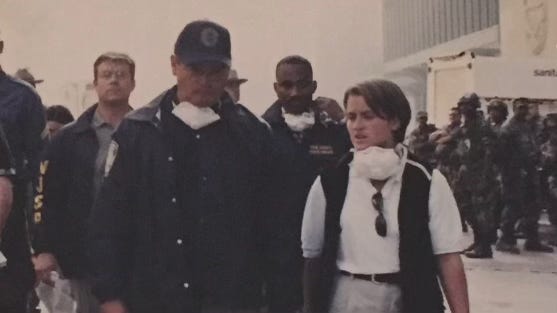
Just that next day and for three weeks after, I traveled to New York for meetings - and funerals - that I will never forget. Faces of grief, resolve and exhaustion lined every room. Those images remain with me to this day.
Fear and Scarcity: What Brené Brown Teaches Us
Brené Brown has written powerfully about how 9/11 did not only leave us with grief but also planted a culture of fear. Fear that asks two questions over and over: What should we fear? Who should we blame?
She describes the rise of a “scarcity culture,” where we never feel “safe enough” or “enough.” Over time, that fear hardened into suspicion, into snark, into division.
I remember the unity of those first days—our patriotism, our shared sorrow, our determination to stand together. But I’ve also witnessed how fear has since pulled us apart. It’s a reminder that if fear is left unchecked, it doesn’t just change our policies. It changes how we treat each other.
A Fresh Tragedy, A Painful Echo
Yesterday, America was shaken by yet another tragedy. Charlie Kirk, founder of Turning Point USA, was shot while speaking at Utah Valley University. He later died from his injuries. He was a husband, a father, a leader who inspired and also provoked many.
The loss is heartbreaking. And it feels like a painful echo of what Brown cautions us about: when fear and anger become our guide, violence follows. Not only do we lose a life—we lose trust, community and the fragile thread of empathy that keeps us together.
What We Owe Each Other
• To grieve honestly. Whether remembering 9/11 or mourning the sudden loss of Charlie Kirk, grief is not indulgence. It is a reckoning.
• To reject violence of all kinds. Physical violence, rhetorical violence, the language of blame and “othering”—all corrode us.
• To lean into courage and vulnerability. As Brown teaches, vulnerability is not weakness. It’s how we build connection in the hardest times.
• To remember our shared stories. These moments remind us that beneath politics and belief, we all share fear, love, grief and hope.
In Memory and Dedication
To the memory of Charlie Kirk: may his family find peace, his children know love and his legacy be tempered by this sorrow. To those who lost loved ones on 9/11 and to all still grieving today, you maintain a special place in my heart.
May this moment not be another fracture, but a turning point. May we choose courage over fear, humanity over hatred, compassion over division.
May God continue to bless America.